Showing posts with label ALES 204. Show all posts

Thursday, 22 March 2012

Wikipedia Stub Entry- Belgian Blue


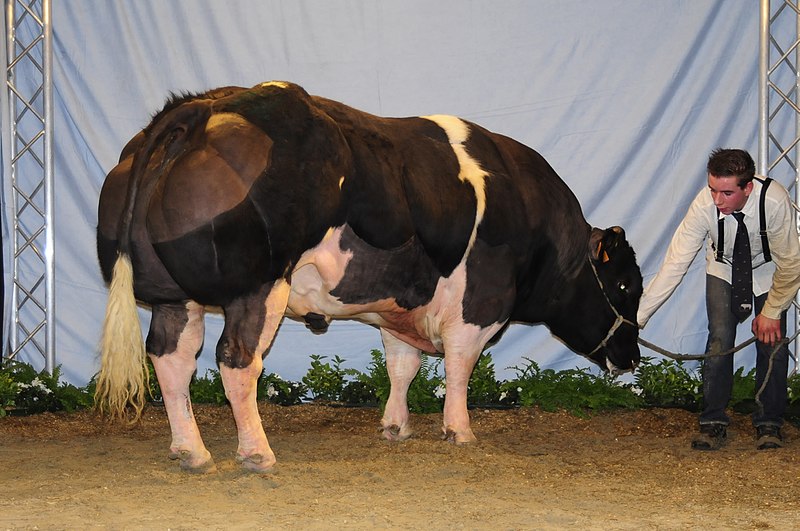
Figure 1. Image of Belgian Blue bull from Flickr.
Hi ALES 204. Here is a blog about my Wikipedia stub entry.
           Wikis are sites designated for the addition, adjustment, and removal of information via the internet; an example of a wiki is Wikipedia. Wikipedia is known as 'the online encyclopedia', which is a collaboration of information from people willing to share their knowledge pertaining to a particular topic.  Nicole Briggs mentioned in her blog that Wikipedia can be used by professionals, such as researchers, to distribute knowledge and research findings to the public faster. However when people use Wikipedia they have to be conscious of the information they attain from these resources. In an article, Wikipedia Founder Discourages Academic Use of His Creation, Jimmy Wales, the founder of Wikipedia, says the site should not be used for “serious research”, because the site does not always contain irrefutable sources. Therefore, using Wikipedia as a source of information should be limited to just using it to attain a brief understanding of an issue or topic of interest. When using Wikipedia people should be aware that the information may not be reputable and possibly bias in certain situations. In addition, information is constantly being changed, so users should always check the facts.

          The Wikipedia stub that I decided to work on was pertaining to a breed of beef cattle known as Belgian Blue. I first heard about this particular breed of cattle during a lecture by Dr. Thomas McFadden, the professor for Animal Sciences (AnSc) 311. In this lecture he discussed the physiological changes that can occur in animals when particular genes and proteins are modified. This particular breed of cattle is known for its signature double-muscled appearance, which has been attained by selective breeding. My particular interest in this topic is due to the implications this breed of cattle could have on future meat yields with pure-breeding and cross-breeding with the Belgian Blue.

          My major in Animal Health is food animals, so I am particularly intrigued by livestock, especially cattle. Cattle breeds such as this could be a more efficient meat yielding breed of cattle, which could allow for an increase in meat production. However there could be a public stigmatism that these cattle are unnatural or genetically modified. Nevertheless, this is not the case, as the double-muscling characteristic is due to a natural genetic mutation. So in order for people to understand this, further research and dissemination of knowledge about this particular breed of cattle will have to occur. This would allow a greater understanding of this breed of cattle by the public. Wikipedia could be used in this situation to give the public a clearer understanding on how researchers and breeders are harnessing natural genetic mutations to create superior breeds. However people have to remember to check their facts because Wikipedia is only a starting point. Preview and review papers are a great location in which to look, after your interest in Belgian Blue cattle is captured.

If you would like to learn more about how this particular genetic mutation have come to define the Belgian Blue breed please read my Wikipedia stub.

Figure 2. Image of Belgian Blue Wikipedia stub from Flickr.


References
Fig. 1. kamp-Bambino vd ijzer copy. (2007). Agriflanders, [digital image]. Retrieved March 21, 2012. From Flickr: http://www.flickr.com/photos/agriflanders/5366421733/in/photostream/

Fig. 2. ALES204-Wiki Image. (2012). Bbohlender, Becky Bohlender, [digital image]. Retrieved March 22, 2012. From Flickr:http://www.flickr.com/photos/75305779@N06/7007748879/in/photostream/


Wednesday, 18 January 2012

Becky Bohlender's Introductory Post!

Figure 1. The RDC Queens 2009-2010 Hockey Team. I am 
on the bottom row second player on the left. Image is 
personal picture available on Flickr.
Hi ALES 204! My name is Becky Bohlender and I am in my fourth year of university. Before coming to the University of Alberta I went to Red Deer College for two years, where I had the opportunity to play varsity girls hockey for the Red Deer College Queens. I do not play hockey competitively anymore, however I am still involved in the game, as I play on a campus rec hockey team and help coach a girls’ team in Leduc. I have been at the U of A for two years, taking a degree in Animal Health, majoring in Food Animals. However, I am trying to get into veterinarian school at either WCVM (Saskatoon) or UCVM (Calgary). I am interested in being a large animal veterinarian; even though I am only 5’1’’, I make up for my height disadvantage with a strong passion and willingness to work hard. One thing I love the most in the world is my dog Molly. She reminds me daily why I want to be a veterinarian and how to laugh because she is just so facetious and adorable.
Figure 2. This is my dog Molly; she is 4 years old. She loves 
sleeping by walls because they cool her down and if she 
has to go out , she will let you know by batting the door-
stop with her paw. Image is Personal Picture available on Flickr.

Communication is very important to me, so I understand the increasing drive towards social media because it brings people across the world closer together. Furthermore, personal communication is not always available, however Skype and video conferencing has allowed for international, face-to-face, communication. I personally still have mixed emotions about using online social media such as Facebook and twitter. I do have a Facebook account, which I go on when I have nothing to do or when I am traveling aboard, in order to stay in touch with people from home. Nevertheless, the more discussion, provoking blogs I read the more I get intrigued about the idea of blogging. Nonetheless, I want to learn how to decipher which blogs are discussion focused and which ones are personal diaries or rant blogs. A downside to online media is it allows for misinterpretations of conversations and for people to divulge more than they should about their daily lives almost as though they think the internet is their public diary. However there are blogs emerging, which are moving people in the direction of relinquishing thought provoking information and discussion, which is what I am truly interested in. I have learned that blogs can be used to expose current issues that are in need of public access and discussion, such as the SOPA Bill, discussed in Wednesday's class. There are also blogs which pertain to peoples' interests, for example, veterinary blogs Veterinary Blogs for pet lovers, which gives owners tips on certain issues pertaining to animal care. The interesting thing about this site is that after the article the veterinarian who wrote it puts their signature on it, as if to say it is a professional’s position, which people can comment on. While my local veterinary clinic, Leduc Veterinary Hospital has decided to stay with the times by creating an online site, which gives information about their clinic, as well as provides a monthly news update about animal health issues and helpful links to other sites for companion and agricultural animals.
In closing, I think face-to-face communication is very important to being a veterinarian and for animal health in general because during client consultations a clear and complete understand of symptoms and issues from owners is needed. Therefore, for my field of study to stay current and keep the general public as well as clients informed about issues and solutions, it has to expand to a  form of social media. Communication is very important to my field of study because sharing information between colleagues is very important during conferences, research, disease outbreaks, and grant proposals. For example, I am working on a research project, early disease detection in cattle and swine, as a behavioural coder. Discussion is essential to this project because some of the data is quite old and there are many people helping out with the project, so the coordinators and lead researchers have to communicate what has to be tested and how the data has to be coded, so the project can be successful. Also everyone is not in the same location, so communication via email, phone, and video conferencing has to all be clear and easy to understand. Consequently being able to clearly express and communicate issues or feelings is very important for progress to be made in my field of study. Personally I will be supporting the use of old fashioned verbal communication for as long as I can, however I know that online social media is becoming more and more important. Lauren Bradshaw, from ALES 204 lab H1, and I have similar exceptions for this class. We anticipate this class will to help us explore the internet and teach us how to us it to its full capacity because we know inevitably social media will take over the world.


References
Fig.1. Hockey 2009-2010. (2012). bbohlender. [digital image]. Retrieved January 19, 2012. From Flickr:
http://farm8.staticflickr.com/7194/6913442874_b05e32aa15_m.jpg

Fig. 2. ALES204-Molly. (2012). bbohlender. [digital image]. Retrieved January 19, 2012. From Flickr:
http://farm6.staticflickr.com/5076/7059503355_bdd661f89e_m.jpg